Reverse Charge VAT in Xero UAE: Practical 2026 Guide
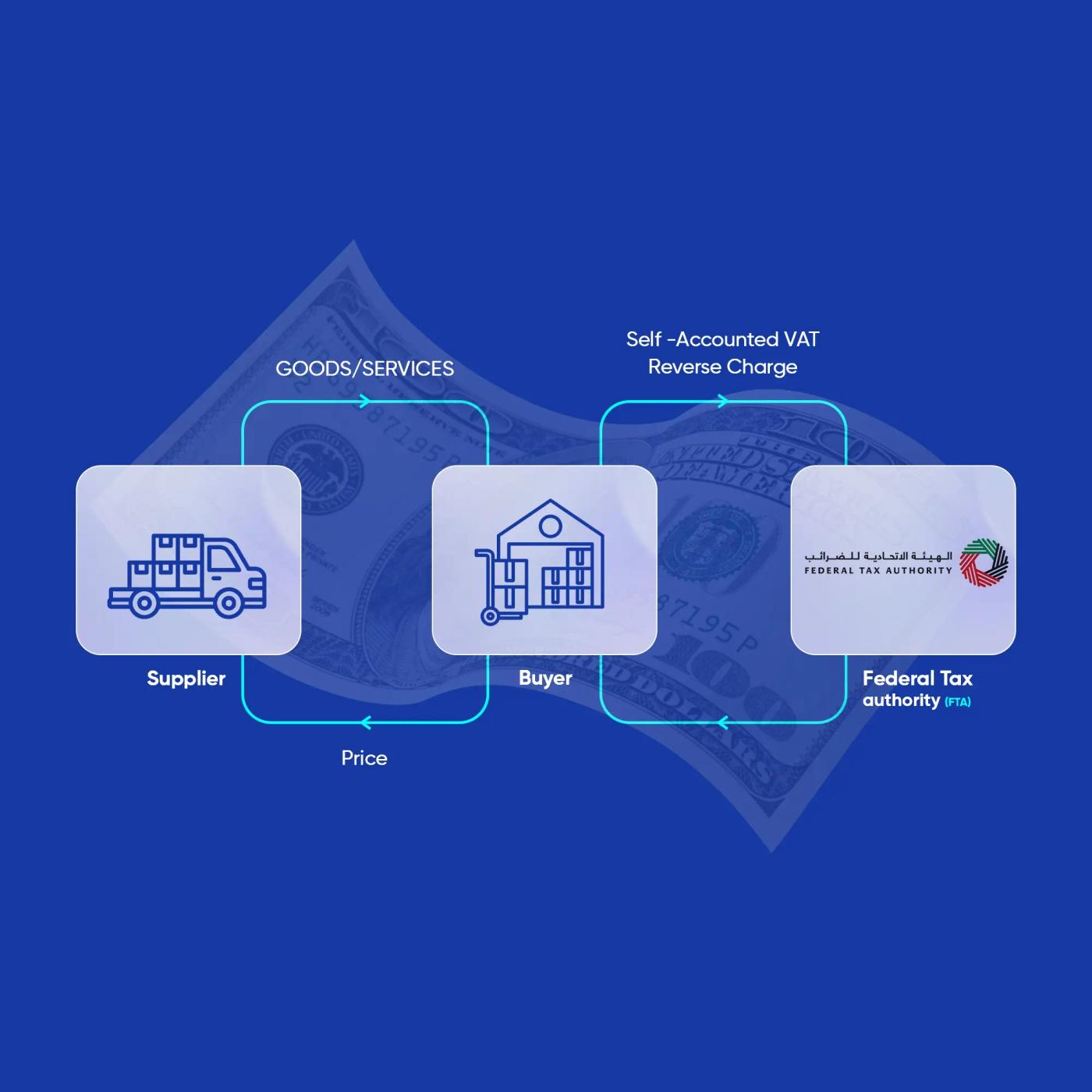
- Reverse charge shifts VAT accounting to the recipient; it does not mean the supplier charged UAE VAT.
- Imported services commonly feed into Box 3, while customs-declared imported goods are generally handled through the import boxes such as Box 6.
- Input VAT recovery is a separate question from whether reverse charge applies.
- Xero's dedicated UAE VAT workflow is still coming soon as of 24 August 2026, so transaction coding and VAT201 mapping still need deliberate review.
Overview
Under the UAE reverse charge mechanism, the customer can become responsible for accounting for VAT instead of the supplier. For a VAT-registered UAE business using Xero, this matters most when buying goods or services from abroad, but specific domestic reverse-charge regimes also exist. The accounting needs to show the VAT correctly without pretending that the foreign supplier actually charged UAE VAT.
The UAE Federal Tax Authority states that VAT is due on goods and services purchased from abroad and, where the UAE recipient is VAT registered, VAT on the import is generally accounted for using the reverse charge mechanism.
In this guide:
- What Is Reverse Charge VAT in the UAE?
- Which Transactions Can Trigger Reverse Charge?
- How Should Reverse Charge Be Handled in Xero?
- Worked Example: Overseas Consulting Invoice
- Where Does Reverse Charge Go on VAT201?
- Common Xero Reverse-Charge Mistakes
- A Practical Month-End Control for Reverse Charge
- Frequently Asked Questions
- How Maaliya Can Help
- Sources
What Is Reverse Charge VAT in the UAE?
Reverse charge shifts the obligation to account for VAT from the supplier to the recipient. Instead of receiving an invoice with UAE VAT charged by the supplier, the UAE recipient calculates the VAT that is due under the applicable rules and reports it in its own VAT return.
Where the business is entitled to recover the same VAT as input tax, the output VAT and recoverable input VAT can offset each other in cash terms. That does not make the transaction irrelevant: it still needs the correct return treatment, supporting records and recovery analysis.
"Reverse charge is a VAT reporting mechanism, not a separate VAT percentage and not simply another name for a 5% purchase code."
Which Transactions Can Trigger Reverse Charge?
Imported Services
Imported services are one of the most common reverse-charge scenarios for UAE SMEs. Examples can include overseas software, professional services, consulting, advertising or other services acquired from a supplier outside the UAE, subject to the place-of-supply and other VAT rules.
Do not decide the treatment only from the supplier's location. The underlying supply, place-of-supply rules, registration status and any applicable exception still matter.
Imported Goods
Imports of goods can also involve reverse-charge accounting, but the VAT return presentation is not identical to imported services. The FTA's current VAT Returns User Guide explains that imports declared through UAE Customs are generally reflected separately in Box 6, while Box 3 covers supplies subject to reverse charge and commonly includes imported services.
Domestic Reverse-Charge Regimes
The UAE also has specific domestic reverse-charge rules for certain supplies. Current FTA legislation includes regimes concerning electronic devices, specified precious metals and precious stones, and metal scrap. These rules have their own conditions, so finance teams should check the current VAT legislation and decisions before coding a domestic purchase as reverse charge.
For example, the FTA explains that the electronic-devices reverse charge applies to qualifying supplies between VAT registrants where the devices are acquired for resale or for producing or manufacturing electronic devices, subject to the detailed conditions. It does not automatically apply when a business simply buys phones or computers for its own staff use. See the FTA clarification on electronic devices.
Run a quick health check on your VAT treatment before you file, and catch reverse-charge and classification issues while they are still easy to fix.
Check VAT Health NowHow Should Reverse Charge Be Handled in Xero?
As of 24 August 2026, Xero says its dedicated UAE VAT workflow is still coming soon. Xero can still hold the accounting data and tax-coded transactions, but UAE businesses should not assume that a generic tax code automatically produces the correct VAT201 treatment.
A practical Xero approach is to use a clearly named, distinct reverse-charge treatment that your finance team has tested against the Sales Tax report and your VAT201 mapping. The exact rate configuration should reflect the transaction and the way your Xero organisation is set up; do not copy a tax-rate name from another country or another Xero file without testing the accounting result.
If your tax-rate structure is already messy, first review Maaliya's Xero UAE Tax Rates Explained guide so standard-rated, zero-rated, exempt, outside-scope and reverse-charge transactions are not mixed together.
Worked Example: Overseas Consulting Invoice
Assume a UAE VAT-registered company receives an AED 20,000 equivalent consulting invoice from an overseas supplier. The supplier does not charge UAE VAT. If the service is subject to UAE VAT under reverse charge at the standard 5% rate, the UAE business accounts for AED 1,000 of output VAT.
If the company is entitled to recover that AED 1,000 in full, it may also recognise AED 1,000 as recoverable input VAT under the applicable rules. The net cash effect from that transaction can therefore be nil, but the transaction still needs to be reported correctly. If only part of the VAT is recoverable, the net VAT cost is not nil.
Where Does Reverse Charge Go on VAT201?
For supplies reported under the general reverse-charge provisions, the FTA VAT Returns User Guide says Box 3 is used for the net value and output VAT due on supplies subject to reverse charge. The guide notes that this commonly relates to purchased services subject to reverse charge.
Where the related VAT is recoverable as input tax, the FTA guide explains that recovery is reflected in Box 10. Imports of goods declared through UAE Customs are generally handled through the import-related boxes instead, including Box 6. The correct box therefore depends on the transaction type and how the import was processed.
For the wider return-preparation workflow, see Maaliya's Xero UAE VAT Return Guide.
Common Xero Reverse-Charge Mistakes
- Booking the foreign supplier invoice as No Tax and never considering whether UAE reverse charge applies.
- Using an ordinary 5% purchase code that makes it look as though the supplier charged UAE VAT.
- Claiming the reverse-charge VAT as fully recoverable without checking the input-tax recovery conditions.
- Treating imported goods exactly like imported services and mapping both to the same VAT201 box.
- Applying a domestic reverse-charge regime without checking the transaction-specific legal conditions and required declarations.
- Posting manual VAT journals that do not reconcile back to the supplier transaction, supporting documents and VAT return working papers.
A Practical Month-End Control for Reverse Charge
Run a monthly review of overseas suppliers and any domestic supplier categories that could fall within a specific reverse-charge regime. Do this before VAT filing rather than trying to identify every reverse-charge transaction at quarter end.
This review also catches several issues covered in Common Xero VAT Mistakes in the UAE before they flow into the return.
Frequently Asked Questions
No. The treatment depends on what was supplied, the place-of-supply rules, the recipient's VAT status and any specific exception. Foreign supplier location is a trigger for review, not an automatic conclusion.
No. The cash effect can be nil when the same VAT is fully recoverable, but partial or blocked input-tax recovery can create a real VAT cost.
Do not use No Tax merely because the supplier did not charge UAE VAT. If reverse charge applies, the transaction needs a treatment that records and reports the recipient's VAT obligation correctly.
As of August 2026, Xero says its dedicated UAE VAT solution is still being rolled out. Planned features include FTA-ready VAT return mapping, guided workflows and FTA Audit File generation. Businesses should therefore check Xero's current feature availability rather than assuming native UAE VAT filing is already available.
Book a free consultation and walk through your reverse-charge treatment and VAT201 mapping with the Maaliya team.
Book a free consultation today!How Maaliya Can Help
Reverse charge is exactly the kind of VAT treatment that can be missed when transaction coding is automated without UAE-specific review. Maaliya is designed to help surface VAT-sensitive transactions around the Xero workflow so finance teams can review them before filing. For the complete process, see How to File UAE VAT Using Xero.
Related Articles
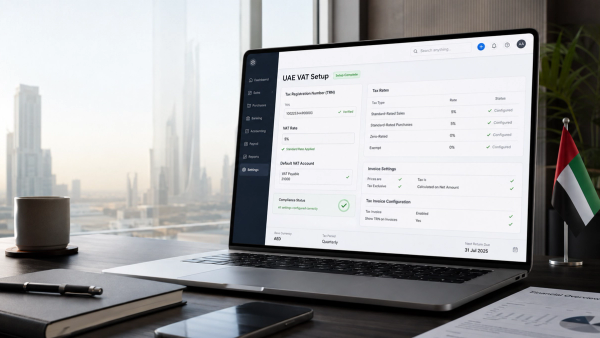
Setting Up Xero for UAE VAT: Step-by-Step Guide
Setting up Xero for UAE VAT takes more than adding a 5% tax rate. This guide walks through TRN setup, VAT codes, invoice configuration, VAT accounts, opening balances and testing your setup.
Xero VAT Codes Explained for UAE Businesses: 2026 Guide
Understand the UAE VAT codes to use in Xero, including 5%, zero-rated, exempt, out-of-scope, reverse charge and the difference between 0% and No Tax.
Sources
UAE Federal Tax Authority, FAQ: Will VAT be paid on imports? Page last updated 22 May 2024; accessed 24 August 2026.
UAE Federal Tax Authority, Value Added Tax (VAT) Returns User Guide. Current guide accessed 24 August 2026.
UAE Federal Tax Authority, VAT Legislation. Page updated 20 August 2026; accessed 24 August 2026.
UAE Federal Tax Authority, Public clarification/news on reverse charge for electronic devices. Published 25 October 2023; accessed 24 August 2026.
Xero UAE, eInvoicing and VAT Software for the UAE. Current product page accessed 24 August 2026.
This article is general information only and does not constitute personalised tax, accounting or legal advice. Reverse-charge treatment depends on the facts of the transaction and current UAE legislation and guidance.
Built for the UAE.