How to File UAE VAT Using Xero: 2026 Step-by-Step Guide
Introduction
How to File UAE VAT Using Xero in 2026
You can use Xero to maintain the accounting records and VAT data needed for a UAE VAT return, but as of 20 August 2026 Xero’s dedicated UAE VAT-return workflow is still described by Xero as coming soon. In practice, the finance team should reconcile and review the VAT data in Xero, then file the VAT return through the Federal Tax Authority’s EmaraTax portal by the applicable deadline.
In this guide:
- Before You Start
- Step 1: Confirm the VAT Period and Filing Deadline
- Step 2: Make Sure Xero Contains the Complete Tax Period
- Step 3: Review the Tax Rates Used in Xero
- Step 4: Review Sales and Output VAT
- Step 5: Review Purchases and Recoverable Input VAT
- Step 6: Review Zero-Rated, Exempt, Out-of-Scope and Reverse-Charge Items
- Step 7: Reconcile the VAT Control Position
- Step 8: Use Xero’s Reports as Working Papers, Not the Final Legal Answer
- Step 9: Complete the VAT Return in EmaraTax
- Step 10: Review Before Submission
- Step 11: Submit and Pay on Time
- Practical VAT Filing Checklist
- Common Mistakes When Filing UAE VAT from Xero
- Can Maaliya Help with the Xero-to-VAT Workflow?
- Frequently Asked Questions
- Related Maaliya Content
- Sources and Disclaimer
Run a quick check on your VAT data before you reconcile and file, and catch classification issues early.
Check VAT Health NowBefore You Start
Before You Start
Do not treat VAT filing as a one-click export exercise. The return is only as reliable as the transactions, tax rates, documents and reconciliations behind it. Before preparing the return, confirm that the Xero organisation reflects the correct UAE legal entity, VAT registration status, TRN, tax period and accounting records.
Step 1: Confirm the VAT Period and Filing Deadline
Step 1: Confirm the VAT Period and Filing Deadline
Log in to EmaraTax and confirm the VAT return period you are required to file. Do not assume every business follows the same quarterly cycle; the return period and deadline shown by the FTA should drive your preparation timetable.
Step 2: Make Sure Xero Contains the Complete Tax Period
Step 2: Make Sure Xero Contains the Complete Tax Period
Complete the bookkeeping for the full VAT period before reviewing the return. Post or import all relevant sales invoices, supplier bills, credit notes, bank transactions, journals and other items that affect the period; missing transactions can understate both output tax and recoverable input tax.
Reconcile each bank and credit-card account to the period end. Unreconciled cash does not automatically mean the VAT return is wrong, but it is a strong warning that transactions may be missing, duplicated or incorrectly dated.
Step 3: Review the Tax Rates Used in Xero
Step 3: Review the Tax Rates Used in Xero
The UAE standard VAT rate is 5%, but the return can also include zero-rated, exempt, out-of-scope and reverse-charge transactions. These are not interchangeable classifications; a transaction producing AED 0 of VAT can still belong in a different reporting category depending on its legal treatment.
A common mistake is using No Tax for a reportable 0% transaction. Xero distinguishes a 0% tax rate from No Tax, so the selected treatment can affect how the transaction appears in sales-tax reporting.
Step 4: Review Sales and Output VAT
Step 4: Review Sales and Output VAT
Review taxable sales for the period and confirm the transaction date, customer, net amount, VAT rate and output VAT. Check credit notes separately, since they can reduce output tax and may fall into a different period from the original invoice.
Step 5: Review Purchases and Recoverable Input VAT
Step 5: Review Purchases and Recoverable Input VAT
Do not assume every supplier invoice showing 5% VAT is fully recoverable. Input-tax recovery depends on the nature of the cost, the supporting documentation and the UAE VAT rules applying to that expenditure.
For each material purchase category, review whether the supplier invoice is valid, the VAT amount is supported, the expense relates to the business, and the tax treatment in Xero reflects the actual transaction.
For a deeper setup review, see Maaliya’s Setting Up Xero for UAE VAT: Step-by-Step Guide.
Step 6: Review Zero-Rated, Exempt, Out-of-Scope and Reverse-Charge Items
Step 6: Review Zero-Rated, Exempt, Out-of-Scope and Reverse-Charge Items
Run a focused review of all non-standard-rated transactions. Zero-rated supplies remain taxable supplies at 0%, while exempt supplies are legally different. Out-of-scope transactions may sit outside UAE VAT altogether, and reverse-charge transactions can require the recipient to account for VAT rather than simply recording an ordinary purchase.
The objective is not merely to make the VAT amount add up; each transaction should also be classified into the correct UAE VAT return category.
Step 7: Reconcile the VAT Control Position
Step 7: Reconcile the VAT Control Position
Reconcile the VAT balance in Xero to the return you are about to file. Start from the opening VAT payable or receivable, add the period’s output tax, subtract recoverable input tax, account for adjustments and payments, and explain the closing balance.
Large unexplained movements, manual journals to VAT, negative balances or repeated use of unusual tax codes should be investigated before filing.
Step 8: Use Xero’s Reports as Working Papers, Not the Final Legal Answer
Step 8: Use Xero’s Reports as Working Papers, Not the Final Legal Answer
The practical current process is therefore: use Xero for the ledger and VAT working data, review the UAE VAT classification, then complete the required return through EmaraTax using the FTA’s current workflow.
Step 9: Complete the VAT Return in EmaraTax
Step 9: Complete the VAT Return in EmaraTax
In EmaraTax, open the required VAT return for the relevant period and complete it using the reconciled figures from your accounting records. The FTA return separates output tax, input tax and the resulting net VAT due across multiple reporting boxes.
Do not copy a single Xero total blindly into EmaraTax. Transactions may need to be grouped according to UAE VAT rules rather than merely by the percentage shown on the invoice.
Step 10: Review Before Submission
Step 10: Review Before Submission
Compare the final EmaraTax figures back to your Xero working papers. At minimum, verify total taxable sales, zero-rated sales where applicable, output VAT, eligible input VAT, adjustments, net VAT payable or refundable and the closing VAT control balance.
Keep an electronic copy of the filed return, supporting reconciliations and key reports so another competent finance professional can understand how the submitted figures were produced.
Step 11: Submit and Pay on Time
Step 11: Submit and Pay on Time
Submit the VAT return through EmaraTax and arrange payment of any VAT due by the applicable deadline. Filing the return and paying the liability are separate obligations, so a submitted return should not be treated as complete until the payment position has also been checked.
- All sales invoices and credit notes for the period are posted.
- All supplier bills and material expenses are posted.
- Bank and card accounts are reconciled.
- 5%, zero-rated, exempt, out-of-scope and reverse-charge treatments have been reviewed.
- Input VAT is supported by appropriate documents and reviewed for recoverability.
- Manual VAT journals and unusual tax codes have been investigated.
- VAT control account reconciles to the return working papers.
- EmaraTax figures agree back to Xero-supported schedules.
- Return and payment deadline has been confirmed in EmaraTax.
Common Mistakes When Filing UAE VAT from Xero
Common Mistakes When Filing UAE VAT from Xero
Assuming Xero Files the UAE VAT Return Automatically Today
As of 20 August 2026, Xero says its UAE VAT-return solution is coming soon. Xero can support the accounting and VAT data, but the filing process still needs to be completed through the FTA’s system.
Treating Every AED 0 VAT Transaction as the Same Thing
Zero-rated, exempt, out-of-scope and No Tax are not synonyms. Incorrect classification can distort the return even when the VAT amount on the individual transaction is zero.
Claiming All Supplier VAT as Recoverable
Input VAT should be reviewed for legal recoverability and supporting evidence. A supplier charging VAT does not by itself prove that the full amount is recoverable.
Filing Before Reconciling the VAT Control Account
A return that does not reconcile to the ledger creates an immediate post-filing problem, because the accounting records and the tax filing tell different stories.
Can Maaliya Help with the Xero-to-VAT Workflow?
Can Maaliya Help with the Xero-to-VAT Workflow?
Maaliya is designed to sit around the accounting workflow rather than replace Xero as the ledger. A UAE-focused finance layer can help with document processing, VAT treatment checks, bank-statement processing and transaction review before the figures are used for filing.
Talk to the Maaliya team about how document processing, VAT treatment checks and reconciliation support can fit around your existing Xero workflow.
Book a free consultation today!Frequently Asked Questions
As of August 2026, Xero says its dedicated UAE VAT solution is still being rolled out. Planned features include FTA-ready VAT return mapping, guided workflows and FTA Audit File generation. Businesses should therefore check Xero's current feature availability rather than assuming native UAE VAT filing is already available.
Filing frequency depends on the tax period the FTA has assigned to the business. Check the return period and due date shown in EmaraTax rather than assuming every business follows the same quarterly or monthly cycle.
The FTA states that VAT returns and related payments are generally due within 28 days from the end of the tax period. Check EmaraTax for the actual due date applying to a specific return.
It is a useful working paper, but not a substitute for reviewing the UAE VAT return classification. The figures still need to be reconciled and mapped to the correct FTA return boxes before filing.
Generally, no. Xero distinguishes a reportable transaction carrying a 0% tax rate from a transaction set to No Tax. If a transaction is zero-rated for VAT purposes, it should be coded to the appropriate 0% treatment rather than automatically being excluded from tax.
Related Maaliya Content
Setting Up Xero for UAE VAT: Step-by-Step Guide
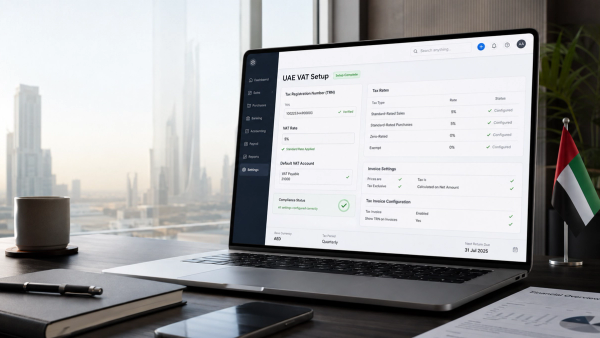
Setting up Xero for UAE VAT takes more than adding a 5% tax rate. This guide walks through TRN setup, VAT codes, invoice configuration, VAT accounts, opening balances and testing your setup.
Xero UAE Tax Rates Explained: A Practical 2026 Guide
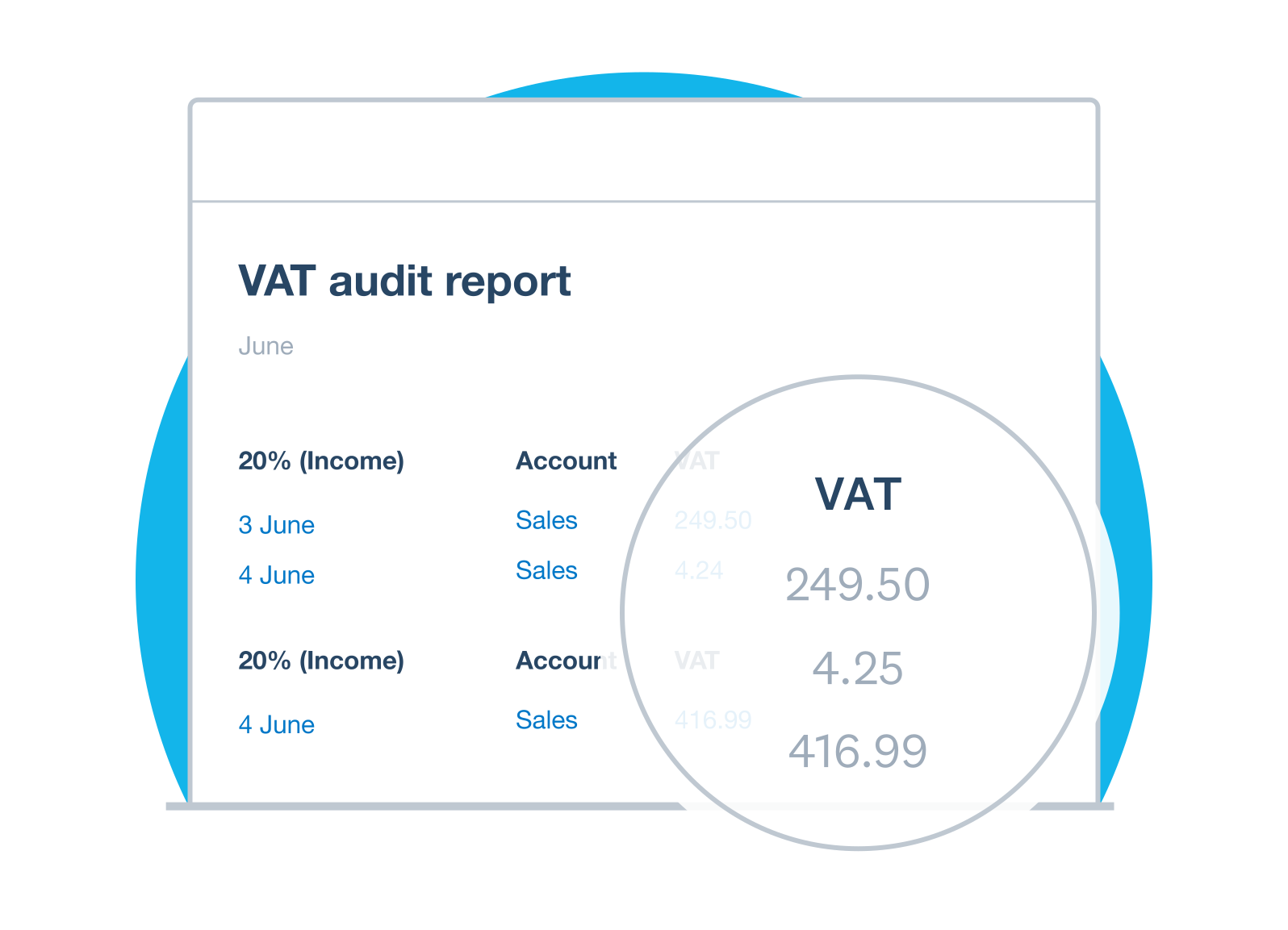
Understand which UAE VAT tax rates and treatments to use in Xero, including 5%, zero-rated, exempt, out-of-scope and reverse-charge transactions.

Xero UAE Setup Guide: How to Configure Xero Properly in 2026
A practical UAE-specific Xero setup guide covering organisation settings, VAT, chart of accounts, bank feeds, migration, invoicing and eInvoicing readiness.
Xero Organisation Settings for UAE Businesses: 2026 Guide
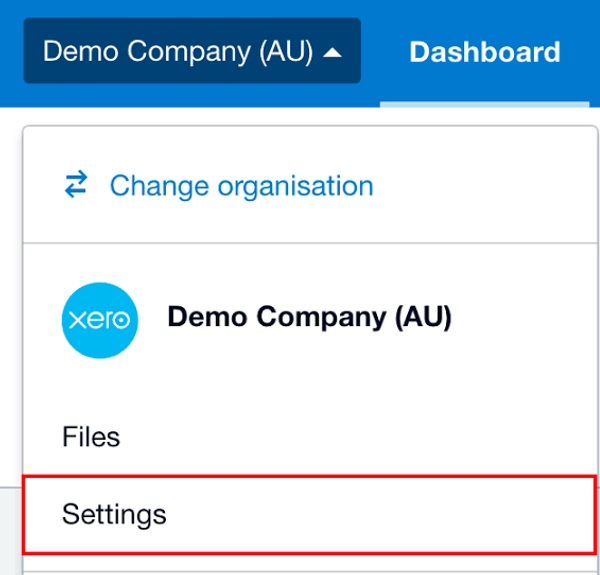
Configure Xero correctly for a UAE business, including organisation details, base currency, financial year, VAT, conversion date, users, invoices and bank setup.
Sources and Disclaimer
Sources and Disclaimer
This article provides general information only and is not personalised tax, accounting or legal advice. UAE VAT treatment depends on the facts of the business and transactions, and material filing decisions should be checked against current FTA guidance.
Built for the UAE.