Best Xero Add-ons for UAE Businesses in 2026

- Hubdoc: the simplest starting point for document capture, included with several UAE Xero plans.
- Dext: better suited to higher-volume OCR and bookkeeping workflows.
- ApprovalMax: adds rule-based approvals and internal controls once a founder is no longer the only approver.
- Stripe: lets customers pay Xero invoices online by card or digital wallet.
- Syft Analytics: strengthens management reporting beyond Xero's native reports.
- Chaser: brings structure to receivables follow-up and collections.
- A UAE-capable payroll app: handles WPS, leave and end-of-service calculations that Xero does not cover natively.
Overview
For most UAE businesses using Xero, the best add-ons are the ones that fix a specific finance bottleneck: document capture, approvals, payments, collections, reporting, payroll or bank-data handling. A lean stack usually beats installing several overlapping apps.
A strong starting stack is Hubdoc or Dext for source documents, ApprovalMax if formal approvals are needed, Stripe for card payments on Xero invoices, Syft for deeper reporting, and a specialist UAE-capable payroll app. Maaliya can also support UAE-focused bookkeeping, bank-statement parsing and reconciliation around Xero where local banking workflows remain manual.
In this guide:
- 1. Hubdoc: best low-cost starting point for document capture
- 2. Dext: best for higher-volume OCR and bookkeeping
- 3. ApprovalMax: best for approvals and internal controls
- 4. Stripe: best for card payments from Xero invoices
- 5. Syft Analytics: best for management reporting
- 6. Chaser: best for structured receivables follow-up
- 7. Payroll: choose a UAE-capable specialist app
- Where Maaliya fits alongside Xero
- How to choose your Xero add-on stack
- UAE VAT and eInvoicing: add-ons do not remove the compliance layer
- Recommended Xero add-on stack by business type
- The best Xero add-on is the one that removes a real bottleneck
- Frequently asked questions
- Related Maaliya content
- Sources
The right choice depends on where your finance team loses time. If the problem is supplier-invoice entry, buy data capture. If managers approve spend over WhatsApp and email, buy approval workflow. If weak bank feeds are the problem, another reporting app will not fix them.
Talk to Maaliya before you commit to another subscription. We'll help you map your actual bottleneck to the right tool.
Book a free consultation today!1. Hubdoc: best low-cost starting point for document capture
Hubdoc is Xero's own document-capture tool. It helps collect bills and receipts, extract data and publish documents into Xero, so source evidence stays attached to the accounting workflow. Xero currently states that Hubdoc is included in its UAE Starter, Standard and Premium plans when connected to the Xero subscription.
Hubdoc is a good fit when invoice volume is modest, the main need is a central inbox for bills and receipts, and adding another major subscription is not worth it. For heavier supplier rules, bulk processing or a more developed pre-accounting review layer, Dext is usually the more relevant comparison.
2. Dext: best for higher-volume OCR and bookkeeping
Dext is better suited to bookkeeping teams processing larger volumes of receipts and supplier invoices. Its Xero integration supports mobile capture, email and bulk upload, then publishes extracted data into Xero. Dext says its extraction reaches more than 99% accuracy; that is a vendor claim, so finance teams should still maintain review controls.
For UAE businesses, the value is operational: less time spent collecting invoices, reading them, coding them and attaching evidence. Choose Hubdoc first if your needs are simple; choose Dext where document volume and bookkeeping workflow justify a dedicated pre-accounting layer. For a head-to-head look at Dext against an AI-native alternative, see Maaliya's comparison of Maaliya versus Dext for UAE businesses.
3. ApprovalMax: best for approvals and internal controls
ApprovalMax is useful once a founder is no longer the only approver. It integrates with Xero and routes finance documents through rule-based approval workflows, while keeping a record of who approved what and when.
A practical UAE workflow might look like this: a supplier invoice is captured, the department owner confirms the spend, finance checks coding and VAT treatment, a director approves items above an internal AED threshold, and the bill then proceeds to posting or payment.
The software does not replace an approval policy. Define thresholds, approvers, exceptions and payment authority first, then automate that policy.
4. Stripe: best for card payments from Xero invoices
Xero's Stripe integration can add payment options to invoices, send payment data back to Xero and support reconciliation of Stripe activity. This is useful when customers are willing to pay online by card or supported digital wallets.
This tends to suit UAE service businesses, agencies and software companies more than large-ticket B2B businesses that normally receive bank transfers. Card convenience can improve payment speed, but fees and payout terms still matter.
A payment gateway is not a credit-control strategy. It reduces payment friction; it does not fix weak terms, poor collections follow-up or customers with genuine liquidity problems.
5. Syft Analytics: best for management reporting
Syft Analytics connects to Xero and can use accounting data, including accounts, contacts, invoices, journals and bank transactions, for reporting and analysis.
It becomes valuable once management repeatedly exports Xero data to Excel to rebuild the same monthly pack, KPI dashboard, cash-flow analysis or multi-entity report. A small founder-led SME may not need a separate reporting layer yet; a scaling finance team often will.
6. Chaser: best for structured receivables follow-up
Chaser integrates with Xero for debtor-management and receivables workflows. Xero's own app-store collections category positions it around automated receivables, cash-flow visibility and payment follow-up.
For UAE B2B businesses where invoices are due in 30 days but collections routinely stretch longer, it can add structure beyond basic reminder emails. Before buying it, define who owns overdue accounts and what happens at 7, 15, 30 and 60 days past due.
7. Payroll: choose a UAE-capable specialist app
UAE businesses should not assume that global Xero Payroll features apply locally. Xero's UAE payroll page says businesses need to integrate a third-party payroll app, with payroll data then feeding into Xero.
Evaluate the payroll product itself for UAE requirements: salary-file or Wage Protection System workflows where applicable, leave, end-of-service calculations, allowances, deductions, payroll journals and how those entries map into Xero. Do not choose an app simply because it appears in a global marketplace.
Where Maaliya fits alongside Xero
Many UAE Xero users do not struggle with the ledger. The friction is getting clean data into it when bank feeds are unavailable, statement formats vary, supplier invoices arrive through different channels and transactions still need review before posting.
Maaliya is designed around those finance-operations gaps: document capture, bank-statement parsing, bookkeeping review and reconciliation workflows that can feed into Xero. The goal is not to replace Xero for an existing Xero user, but to reduce the manual work around it. For a broader look at this category, see Maaliya's guide to the best AI bookkeeping software for UAE businesses.
If bank connectivity is the main issue, read Maaliya's guide to alternatives to Xero bank feeds in the UAE.
If reconciliation is the bottleneck, use Maaliya's Xero reconciliation guide for UAE businesses.
Whichever Xero add-ons you choose, Maaliya can automate the document capture, bank-statement parsing and reconciliation work that happens around Xero.
Parse your bank statements now!How to choose your Xero add-on stack
UAE VAT and eInvoicing: add-ons do not remove the compliance layer
A Xero integration does not automatically make a UAE business VAT-compliant. VAT treatment still depends on the underlying transaction, and automated postings need correct UAE tax-code mappings. Review Maaliya's Xero VAT setup guide before automating large volumes of postings.
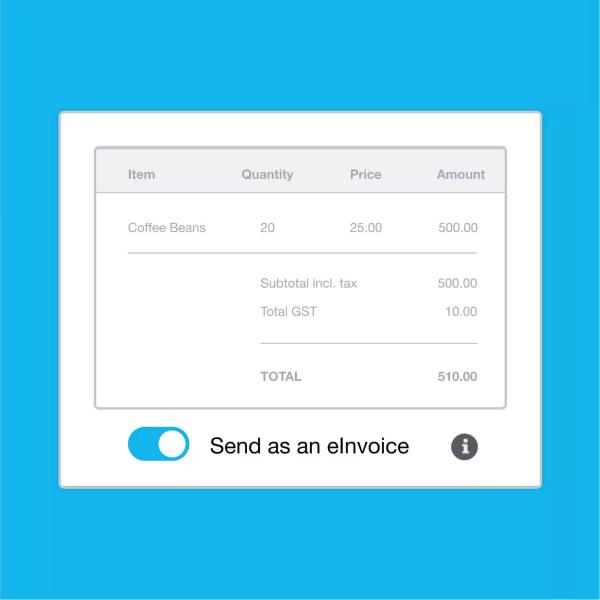
UAE eInvoicing is a separate consideration. Xero currently states that UAE eInvoicing is available through Xero for Starter, Standard and Premium customers. Businesses with revenue of AED 50 million or more have an ASP selection deadline of 30 October 2026 and an implementation date of 1 January 2027; businesses below AED 50 million have deadlines of 31 March 2027 and 1 July 2027 respectively.
For the current position and timeline, read Maaliya's Xero UAE eInvoicing guide.
Recommended Xero add-on stack by business type
A starting point based on business size and finance-team maturity; adjust for your actual bottlenecks.
| Business type | Recommended stack |
|---|---|
| Small service business | Xero + Hubdoc for document capture + Stripe if customers pay by card + a UAE-capable payroll app if you have employees. |
| Growing SME with a finance team | Xero + Dext for higher-volume capture + ApprovalMax for approvals + Syft for management reporting + a UAE payroll app. Add Maaliya where bank-statement parsing or reconciliation remains manual. |
| B2B company with slow collections | Xero + Hubdoc or Dext + ApprovalMax where spend controls are needed + Chaser for structured collections + Syft where management reporting remains spreadsheet-heavy. |
The best Xero add-on is the one that removes a real bottleneck
For most UAE SMEs, the goal is not to build a giant app stack. Hubdoc is the sensible first document-capture option because it is included with several UAE Xero plans; Dext is stronger for heavier bookkeeping; ApprovalMax adds control; Stripe can reduce payment friction; Syft improves reporting; and Chaser can professionalise collections. Payroll should be handled by a provider that genuinely supports UAE requirements.
If the pain sits between bank statements, documents and Xero rather than inside Xero itself, that is the gap Maaliya is intended to solve.
Frequently asked questions
Yes. Xero currently states that Hubdoc is included with UAE Starter, Standard and Premium plans when connected to the Xero subscription.
Dext is generally better suited to higher-volume document capture and bookkeeping workflows. Hubdoc is a strong first choice for simpler needs because it is included with several UAE Xero plans.
Not natively as a complete UAE payroll system. Xero recommends integrating a specialist payroll application.
No. Integrations automate data movement, but the business still needs correct VAT mappings, tax codes and transaction treatment.
If the bottleneck is getting invoices, bank statements and reconciliations into a clean Xero workflow, explore Maaliya's bookkeeping, statement-parsing and reconciliation tools.
Book a free consultation today!Related Maaliya content


Sources
- Xero: UAE pricing plans and Hubdoc inclusion. Accessed 14 September 2026.
- Dext: Dext for Xero integration. Accessed 14 September 2026.
- Xero App Store: ApprovalMax integration. Accessed 14 September 2026.
- Xero App Store: Stripe integration. Accessed 14 September 2026.
- Syft Analytics: Xero integration knowledge centre. Accessed 14 September 2026.
- Xero UAE: Payroll software and third-party app guidance. Accessed 14 September 2026.
- Xero UAE: UAE eInvoicing availability and implementation dates. Accessed 14 September 2026.
Like what you read? Add Maaliya as a preferred source on Google.
Built for the UAE.