Maaliya AppFinance software you use yourself
AccountingOur accountants run your finances
Business ServicesSet up, run or close a UAE company
ResourcesGuides, research and free tools
About usWho we are and how to reach us
Xero Financial Year Settings UAE: 2026 Guide
 Lina Mansouri
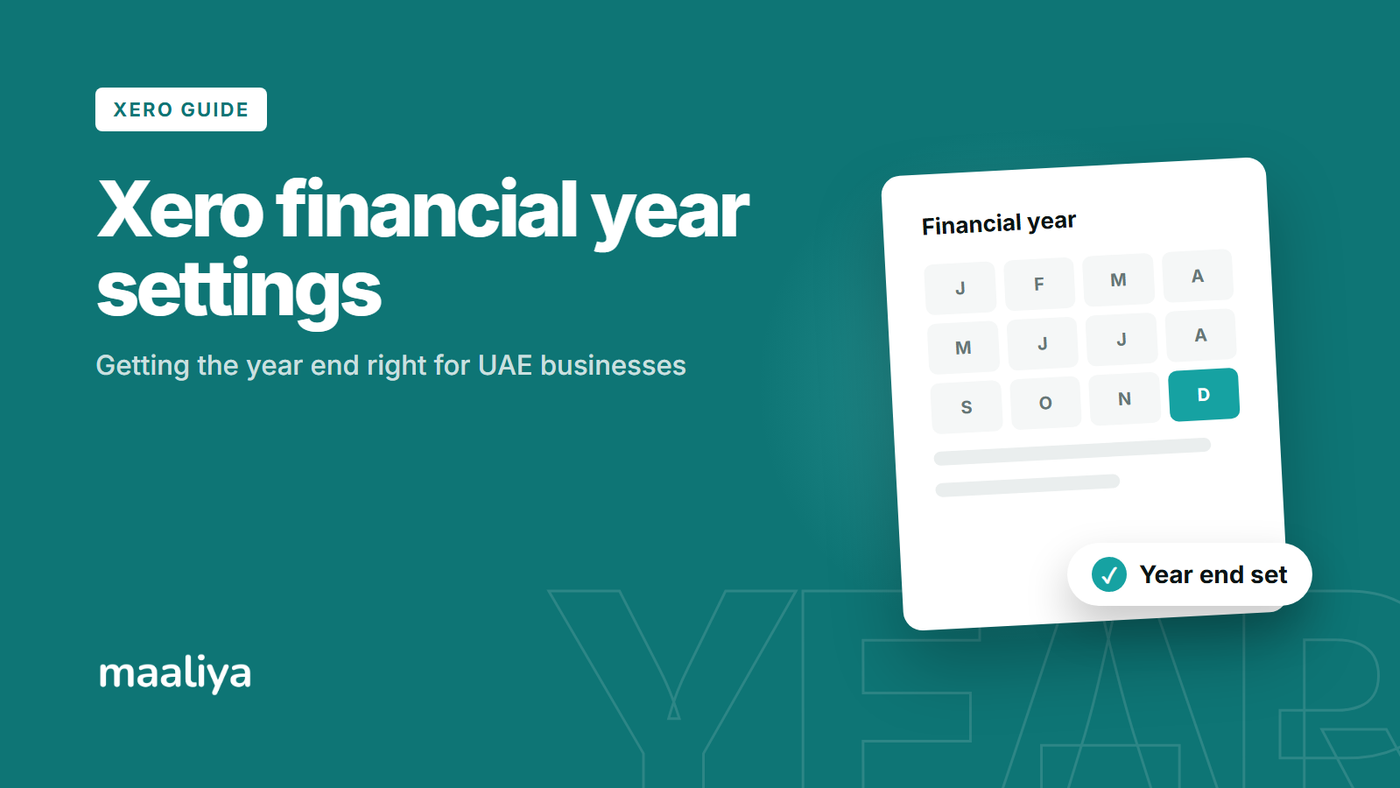
- Xero's financial year should match the period a UAE business actually uses to prepare its financial statements, which does not have to end on 31 December.
- The FTA treats a Taxable Person's Financial Year as the Gregorian calendar year, or the 12-month period used to prepare financial statements, with some flexibility for a first Financial Year of 6 to 18 months under the Commercial Companies Law.
- Changing the financial year-end setting in Xero does not change the Corporate Tax Tax Period recognised by the FTA; changing the Tax Period itself requires a separate application to the FTA.
- An incorrect year-end does not make transactions wrong, but it can distort profit and loss, balance sheet comparisons, budgets and year-to-date reporting.
- VAT return periods and the annual financial year serve different purposes, so the financial year should not be changed just to line up with a VAT quarter.
- Corporate Tax returns and payment are generally due within nine months of the end of the relevant Tax Period, for example 30 September 2026 for a Tax Period ended 31 December 2025.
Overview
For a UAE company, Xero's financial year should match the period the business actually uses to prepare its financial statements. That does not have to be 1 January to 31 December: a company can use a different year-end, such as 30 June, where that is genuinely its accounting year. Getting this setting right matters for reporting, and it is worth understanding upfront that changing it does not automatically change anything for UAE Corporate Tax.
In this guide:
- What Financial Year Should a UAE Business Use in Xero?
- How to Set the Financial Year in Xero
- Does Changing Xero's Financial Year Change Your UAE Corporate Tax Period?
- Why the Setting Matters for Reporting
- Should the Xero Year-End Match VAT Periods?
- UAE Examples
- What to Check Before Changing an Existing Xero Year-End
- Practical Setup Checklist
- Common Mistakes
- Frequently Asked Questions
- Check Your VAT Setup Too
- Related Maaliya Guides
- Sources
What Financial Year Should a UAE Business Use in Xero?
Use the financial year-end that applies to the business, rather than assuming every UAE company must use December. The UAE Federal Tax Authority states that a Taxable Person's Financial Year is the Gregorian calendar year, or the 12-month period for which the Taxable Person prepares its financial statements. For companies subject to the Commercial Companies Law, the first Financial Year can in some cases run for between 6 and 18 months.
How to Set the Financial Year in Xero
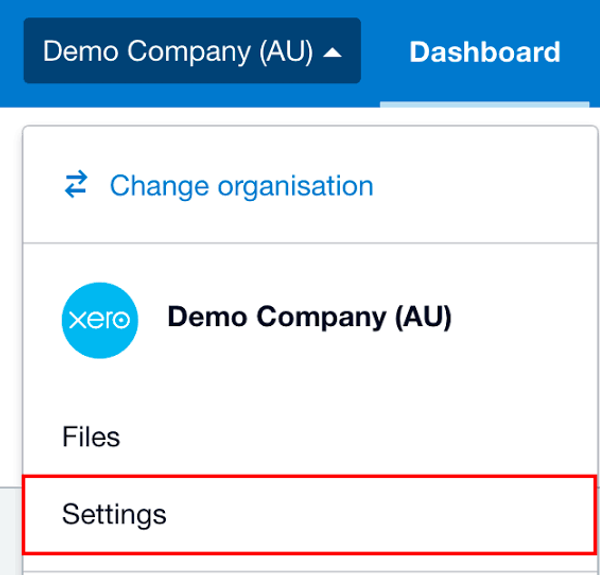
Open Xero's organisation settings and review the financial settings there. Set the financial year-end to the month that matches the company's approved accounting year.
Before changing an existing organisation, confirm the year-end from prior financial statements, incorporation records, the accountant or auditor, and Corporate Tax records where applicable.
If you're configuring a UAE Xero organisation from scratch, Maaliya's Xero UAE Setup Guide walks through the full setup checklist.
Does Changing Xero's Financial Year Change Your UAE Corporate Tax Period?
No. Changing a setting in Xero does not by itself change the Tax Period recognised by the FTA. FTA Corporate Tax guidance states that a Taxable Person wishing to change its Tax Period can apply to change the start and end dates, subject to the applicable conditions. Resolve the legal and tax-period change first, then align Xero afterward.
Changing a setting in Xero doesn't change your FTA Tax Period. If you need help confirming or formally changing it, Maaliya can talk it through with you.
Book a free consultation today!Why the Setting Matters for Reporting
An incorrect year-end can put annual profit and loss, balance sheet comparisons, budgets and year-to-date reporting against the wrong annual boundaries. The transactions themselves are not automatically wrong, but management and year-end reports can become misleading or difficult to compare.
Should the Xero Year-End Match VAT Periods?
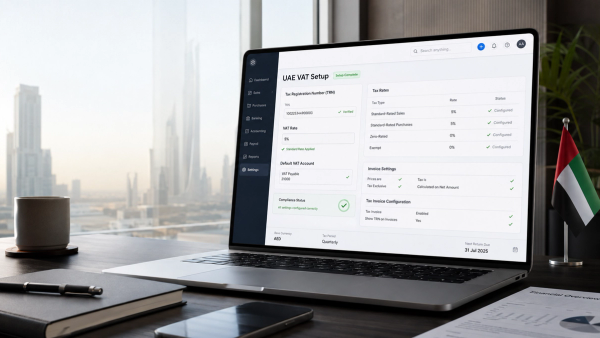
Not necessarily. VAT return periods and the financial year serve different purposes, so don't change the annual financial year merely to line it up with a VAT quarter. Maintain the correct accounting year, and prepare VAT reports separately for the VAT periods assigned to the business. See Maaliya's guide to Setting Up Xero for UAE VAT for the full VAT configuration.
UAE Examples
The following examples show how a UAE company's year-end shapes both the Xero setup and the Corporate Tax filing deadline.
31 December Year-End
If the company prepares accounts from 1 January to 31 December, use a December financial year-end in Xero. Corporate Tax returns and payment are generally due within nine months of the end of the relevant Tax Period; for the Tax Period ended 31 December 2025, the FTA confirmed a deadline of 30 September 2026.
30 June Year-End
If the company prepares accounts from 1 July to 30 June, use a June financial year-end in Xero, so annual management and statutory reports follow the same cycle. The Corporate Tax filing and payment deadline would generally fall nine months after the relevant Tax Period ends, subject to any applicable exception.
What to Check Before Changing an Existing Xero Year-End
Confirm the approved financial year, the Corporate Tax Tax Period, previously filed financial statements and returns, comparative reporting requirements, budgets, lock dates, and any reports already supplied to management, lenders or investors. Document the reason for the change if historical reporting has already been finalised.
Practical Setup Checklist
Common Mistakes
Common mistakes include assuming every UAE company must have a December year-end, changing Xero without checking the Corporate Tax period, confusing VAT quarters with the financial year, and discovering at year-end that management reports have been run on inconsistent dates.
Frequently Asked Questions
Yes. UAE Corporate Tax guidance recognises a Financial Year as the Gregorian calendar year, or the 12-month period for which a Taxable Person prepares its financial statements, subject to applicable legal requirements.
No. A Xero setting does not itself amend the Tax Period recognised by the FTA. A Taxable Person wishing to change its Tax Period may need to apply to the FTA and satisfy the relevant conditions.
Corporate Tax returns and payment are generally due within nine months of the end of the relevant Tax Period. Check for any decision or exception that applies to the business.
Check Your VAT Setup Too
Reviewing year-end settings is also a good moment to check whether VAT coding, reporting and transaction treatment are clean. Maaliya's VAT Health Checker can help identify common UAE VAT issues before they flow into a return.
While you're reviewing your Xero setup, run a quick check on your VAT coding and transaction treatment.
Check VAT Health NowRelated Maaliya Guides
Sources
Federal Tax Authority, Corporate Tax General Guide (CTGGCT1). Accessed 30 September 2026.
Federal Tax Authority, Public Clarification on the First Tax Period for a Juridical Person, updated 13 August 2024. Accessed 30 September 2026.
Ministry of Finance, Corporate Tax in the UAE. Accessed 30 September 2026.
Lina Mansouri is a Corporate Services specialist at Maaliya, where she helps UAE businesses with company incorporation, VAT and corporate tax registration, and liquidation. She writes Maaliya's guides to Xero, UAE VAT, bank reconciliation and eInvoicing, drawing on the questions UAE founders and finance teams bring to Maaliya every day.
Like what you read? Add Maaliya as a preferred source on Google.
Built for the UAE.