Maaliya AppFinance software you use yourself
AccountingOur accountants run your finances
Business ServicesSet up, run or close a UAE company
ResourcesGuides, research and free tools
About usWho we are and how to reach us
UAE eInvoicing: Complete SME Guide for 2026-2027
 Lina Mansouri
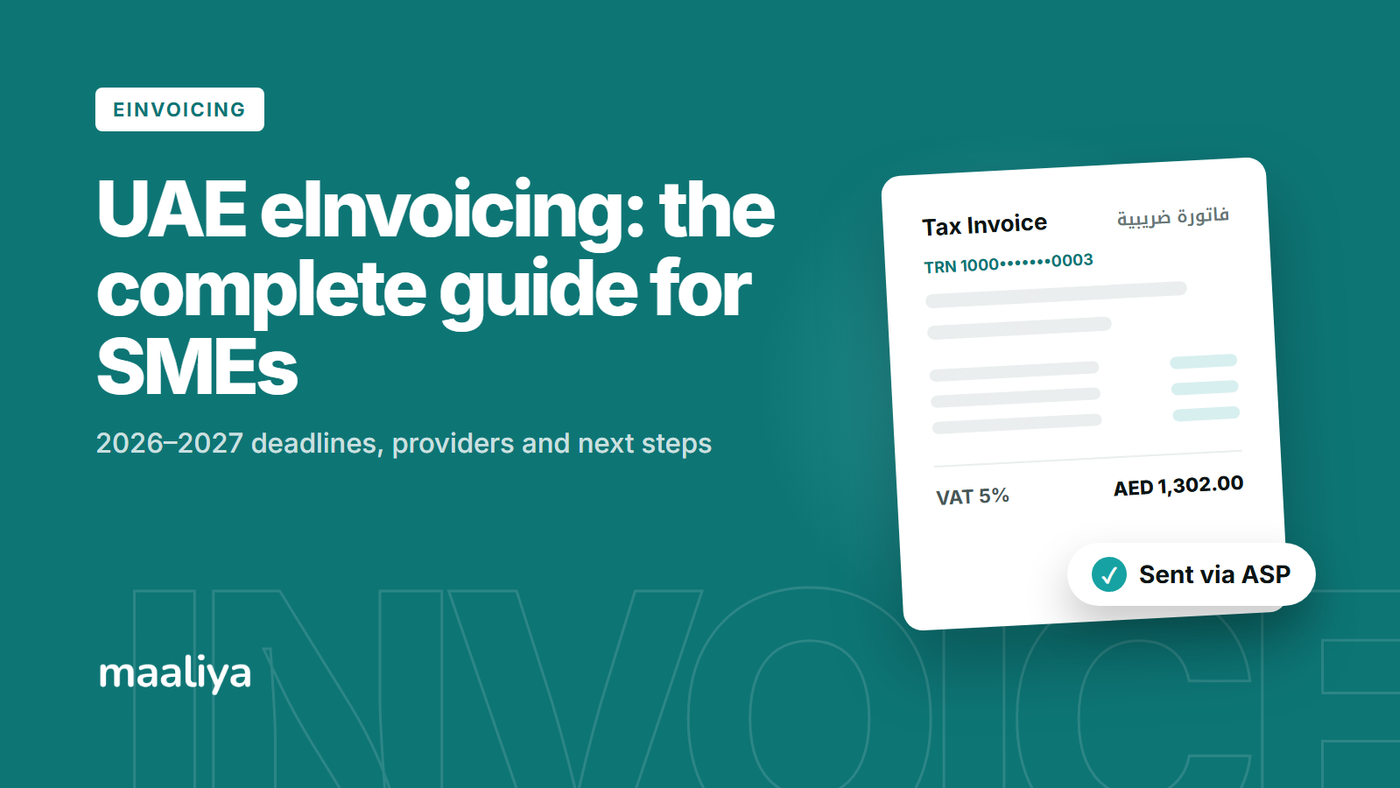
UAE eInvoicing is moving B2B and B2G invoicing from PDFs and emailed documents to structured electronic invoice data exchanged through Accredited Service Providers and reported to the Federal Tax Authority. For most SMEs below AED 50 million in annual revenue, the key dates are 31 March 2027 to appoint an ASP and 1 July 2027 to implement the system.
In this guide:
- Key Takeaways
- What Is UAE eInvoicing?
- Who Is in Scope?
- UAE eInvoicing Timeline for 2026-2027
- Why the 2026 Deadline Changed
- How the UAE Five-Corner Model Works
- What Data Must an eInvoice Contain?
- What Does an Accredited Service Provider Do?
- What Happens to PDF Invoices?
- What Changed in the Penalty Rules in 2026?
- What Should UAE SMEs Do Now?
- Frequently Asked Questions
- Related Maaliya Content
- Sources
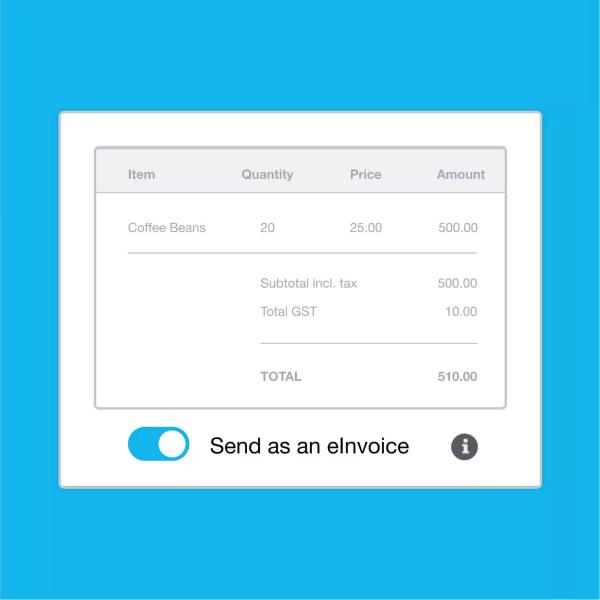
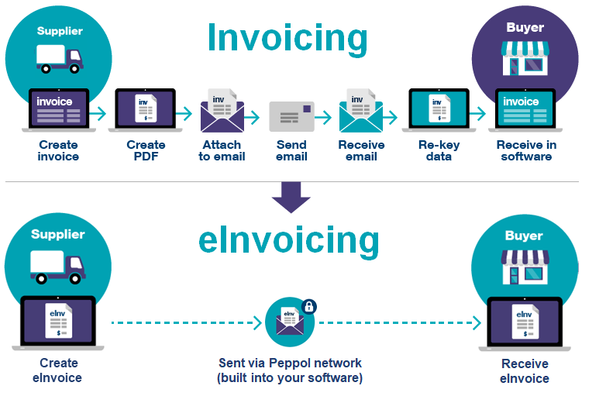
- An emailed PDF is not an eInvoice. The invoice must exist as structured data that can be validated, exchanged and reported electronically.
- Businesses with annual revenue of AED 50 million or more had to appoint an ASP by 30 October 2026 and must implement eInvoicing from 1 January 2027.
- Businesses below AED 50 million must appoint an ASP by 31 March 2027 and implement eInvoicing from 1 July 2027.
- The framework covers B2B and B2G transactions regardless of VAT registration status. B2C stays outside the mandatory system for now.
- The UAE uses a decentralised five-corner model built around Peppol, connecting supplier and buyer through their respective ASPs, with tax data reported to the government platform.
What Is UAE eInvoicing?
The Ministry of Finance defines an eInvoice as structured invoice data issued and exchanged electronically between supplier and buyer and reported electronically to the FTA. PDFs, Word files, images, scanned copies and ordinary emails are specifically not eInvoices. See the official UAE eInvoicing portal.
This is an important distinction for SMEs. Your team may still see a human-readable invoice on screen or receive a PDF copy for convenience, but compliance depends on the structured invoice data moving through the regulated network.
Who Is in Scope?
The FTA states that the framework encompasses B2B and B2G transactions regardless of whether the parties are VAT registered. Businesses do not connect directly to the UAE Peppol Authority; they work through an Accredited Service Provider. See the FTA eInvoicing FAQs.
Business-to-consumer transactions are currently excluded from the mandatory framework until a future decision brings them into scope. A business that deals only with consumers therefore has a different implementation position from a company issuing B2B invoices.
UAE eInvoicing Timeline for 2026-2027
Dates sourced from the Ministry of Finance and FTA. See the note below on the 2026 deadline amendment for AED 50 million+ businesses.
| Phase / entity | Appoint an ASP by | Mandatory implementation from |
|---|---|---|
| Pilot programme (selected taxpayers, voluntary) | - | From 1 July 2026 |
| AED 50 million+ annual revenue | 30 October 2026 | 1 January 2027 |
| Below AED 50 million annual revenue | 31 March 2027 | 1 July 2027 |
| Government entities | 31 March 2027 | 1 October 2027 |
Why the 2026 Deadline Changed
The AED 50 million+ appointment deadline was originally 31 July 2026 and was later extended to 30 October 2026 by Ministerial Decision No. 66 of 2026. The implementation date of 1 January 2027 remained unchanged. See the amending Ministerial Decision.
How the UAE Five-Corner Model Works
The model separates commercial exchange from tax reporting. The ASPs validate the invoice structure and exchange it over the network while the required tax data is reported to Corner 5.
FTA-compliant invoicing is included on every Maaliya plan, including Free. Businesses under AED 50 million are covered for eInvoicing through Maaliya's ASP partners, with no new software for your team, and PDF invoices keep working until your go-live date.
Explore Smart FTA InvoicingWhat Data Must an eInvoice Contain?
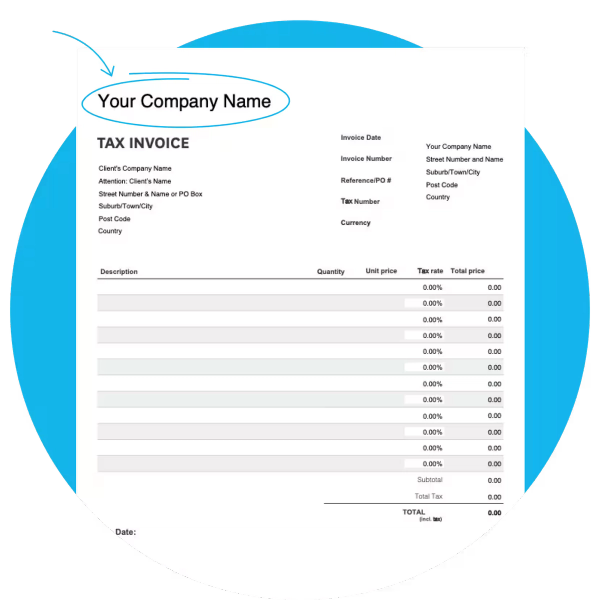
The exact technical requirements are defined by the UAE data dictionary and PINT AE specifications. In practical terms, businesses need clean master data and invoice data: supplier and buyer identifiers, invoice and credit-note numbers, dates, currencies, line descriptions, quantities, values, VAT categories, tax amounts and other required fields.
For SMEs, the preparation work is often less about learning XML and more about fixing the data that feeds the XML. Incorrect TRNs, inconsistent customer legal names, weak product descriptions or ad-hoc VAT coding can create validation problems once structured exchange becomes mandatory.
If your current invoices still need work, review Maaliya's Creating UAE-Compliant Invoices in Xero: 2026 Guide before treating eInvoicing as only a software project.
What Does an Accredited Service Provider Do?
An Accredited Service Provider is the regulated connectivity layer between your business and the UAE eInvoicing network. It handles technical validation, exchange with the counterparty's provider and reporting of the required tax data. Businesses must choose and commercially engage an accredited provider rather than connecting directly to the Peppol authority.
When comparing ASPs, SMEs should look at integration method, onboarding effort, accounting-software compatibility, support, pricing, data residency/security requirements and how exceptions or rejected invoices are handled.
What Happens to PDF Invoices?
PDF invoices do not disappear overnight. They can continue to be useful as a readable representation for people, but the PDF itself is not the compliant eInvoice. Until your mandatory go-live date, your existing PDF process can continue subject to normal tax-invoice rules. Once you are in scope, the structured eInvoice process becomes the compliance layer.
For Xero users specifically, see Does Xero Support UAE eInvoicing? 2026 Status & Timeline for the current product-specific position.
What Changed in the Penalty Rules in 2026?
Cabinet Decision No. 173 of 2026 replaced the earlier eInvoicing penalty decision. The Ministry of Finance announced that failure to meet core implementation obligations can attract AED 5,000 for the initial violation and AED 5,000 for each month or part of a month that non-compliance continues, capped at AED 50,000 for those violations in any 12 consecutive months. The updated decision also removed the previous penalty for failing to notify the Authority of a system failure. See the Ministry of Finance penalty update.
Other eInvoicing and ordinary tax-invoice failures may carry separate consequences under the applicable legislation. Because the penalty framework was amended shortly before mandatory rollout, businesses should check the current MoF legislation before relying on an old penalty table.
What Should UAE SMEs Do Now?
- Confirm which implementation phase applies using the entity's annual revenue and transaction profile.
- Choose an Accredited Service Provider early enough to complete commercial onboarding, mapping and testing before the deadline.
- Clean customer and supplier master data, including legal names, tax identifiers and addresses.
- Standardise invoice numbering, VAT codes, currencies, credit-note processes and line-item descriptions.
- Test how your accounting or invoicing system will pass structured data to the ASP and receive status messages back.
- Create an exception process for rejected invoices, wrong master data and temporary system outages.
- Train finance and sales teams so they understand that the structured record, not the PDF, is the regulated invoice.
On Done-for-you plans, Maaliya's accountants run your invoicing and VAT for you inside Maaliya, so eInvoicing readiness is one less project for your team.
Book a free consultation today!Frequently Asked Questions
Yes, if they are within scope for B2B or B2G transactions. Businesses below AED 50 million annual revenue have the later phase: ASP appointment by 31 March 2027 and implementation from 1 July 2027.
No. The Ministry of Finance explicitly says PDFs, Word files, images, scanned copies and emails are not eInvoices. A compliant eInvoice is structured data exchanged and reported electronically.
Potentially yes. The FTA states that B2B and B2G transactions are covered regardless of VAT registration status, subject to the implementation scope and exclusions.
No. Businesses are expected to engage an Accredited Service Provider, which handles the technical connection and reporting flow.
Not yet under the current mandatory framework. B2C transactions remain excluded until a future decision specifies otherwise.
Related Maaliya Content

Sources
Ministry of Finance: UAE eInvoicing portal | Accessed 14 November 2026
Federal Tax Authority: UAE eInvoicing FAQs | Accessed 14 November 2026
Ministry of Finance: Ministerial Decision No. 66 of 2026 | Accessed 14 November 2026
Ministry of Finance: Updated administrative penalties related to UAE eInvoicing | Published 30 October 2026 | Accessed 14 November 2026
This article is general information and not personalised tax or legal advice. UAE eInvoicing requirements are evolving; confirm material implementation decisions against the latest Ministry of Finance and FTA publications.
Lina Mansouri is a Corporate Services specialist at Maaliya, where she helps UAE businesses with company incorporation, VAT and corporate tax registration, and liquidation. She writes Maaliya's guides to Xero, UAE VAT, bank reconciliation and eInvoicing, drawing on the questions UAE founders and finance teams bring to Maaliya every day.
Like what you read? Add Maaliya as a preferred source on Google.
Built for the UAE.